Solo Project
HealthWins
Time
2024 · 1 months
Role
Brand Design
UI Design
Visual Storytelling
Field
Health Care
View Hi-fi Prototype in Figma ↗

Overview
Spatial Focus
Tangible UI
Behavioral Design
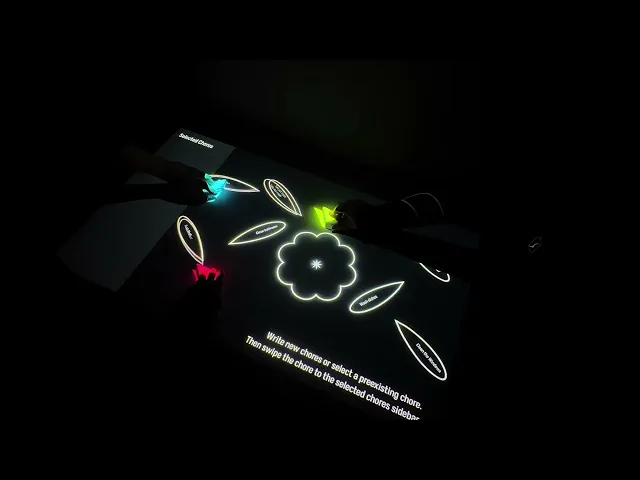
Bloommates is designed as a hybrid interactive table system that creates an transforms everyday coordination into a shared spatial experience. The system lives on a communal table surface where roommates interact together through tangible “petals” and gesture based controls.
Living Together, Not Alone
Living with roommates is a common experience, but balancing different living habits and keeping the place clean can be really tricky.
In this project, we wanted to tackle a few common roommate problems: the feeling that you're doing more than your fair share,
the struggle to divide up chores when everyone has different schedules, and the challenge of remembering what needs to be done without constant reminders.
Archetypes
The Overburdened Organizer
Responsibilities:
Keeps track of chores.
Picks up slack when others don’t follow through.
Goals:
Maintain the space clean and organized.
Maintain harmony at home.
Motivations:
Values fairness and structure.
Wants to avoid conflicts.

The Duty-Conscious Negotiator

Responsibilities:
Ensures duties are divided accurately and fairly.
Reminds roommates about deadlines.
Mediates disputes over chores and helps establish ground rules for shared space.
Goals:
Wants chores done on time and evenly split.
Build trust with roommates by making responsibilities visible and structured.
Motivations:
Believes that fairness and equality are the foundation of good co-living.
Wants to avoid resentment by keeping everything transparent and documented.
Feels a sense of responsibility to prevent the group from slipping into chaos.
The Easygoing Forgetter

Responsibilities:
Has assigned chores, but often procrastinates or forgets.
Occasionally offers to help with extra tasks but rarely follows through.
Goals:
Avoid being the “bad roommate” or the source of conflict.
Contribute just enough to keep things fair.
Keep household life light and stress-free.
Motivations:
Values peace, fun, and low-stress living.
Wants to be liked by roommates and maintain good vibes.
Prefers spontaneity over rigid schedules.
Pain Points
Stressed when others aren’t accountable
Always the one who picks up slack
Becomes stressed if roommates are vague, late, or inconsistent with chores
Often feels like the “bad guy” when reminding others
Not detail-oriented, more “go with the flow.” leads to missed deadlines
Feels guilty when roommates pick up their slack, but struggles to change habits
The Problem
How might we help roommates who have different behavioral patterns manage and stay accountable for shared chores so that responsibilities feel fair, deadlines are clear, and conflicts are reduced?
Strategic Insight
Why Mobile Apps Fail?
Mobile apps are too private to alleviate the supervisory pressure on Organizers, nor can they enter the spatial awareness of Forgetters. Our research led to a critical realization: Personal devices create silos, while shared spaces require a communal hub.
Why Interactive Table?
A table, however, is the heart of the home. It is communal, visible, and unavoidable. By shifting the interface from a pocket-sized screen to a shared surface, we created a platform for collective awareness.
Solution
Bloommates: An Interactive Table System
Rather than using isolated mobile apps. Interactive table in a shared space is naturally on the movement rows and fits the behavioral logic of the people who share the space. It visualize deadlines, chores progress, each person's contributions.
Demo Video
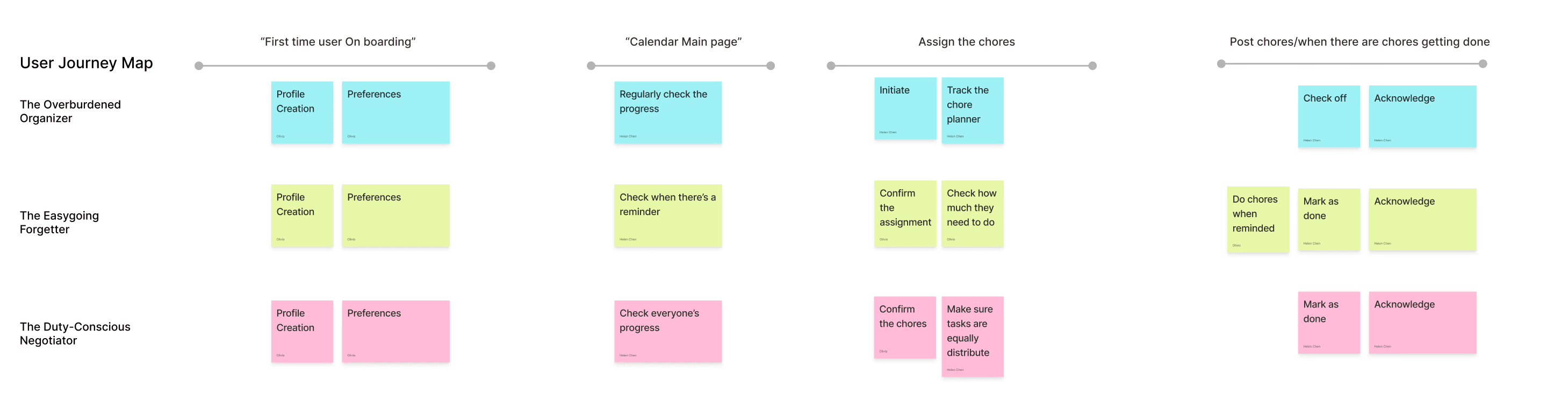
User Journey Map
Prototype Walkthrough
Task 1: Onboarding
Archetypes tasks:
Creating Profile
Creating Profile
Creating Profile
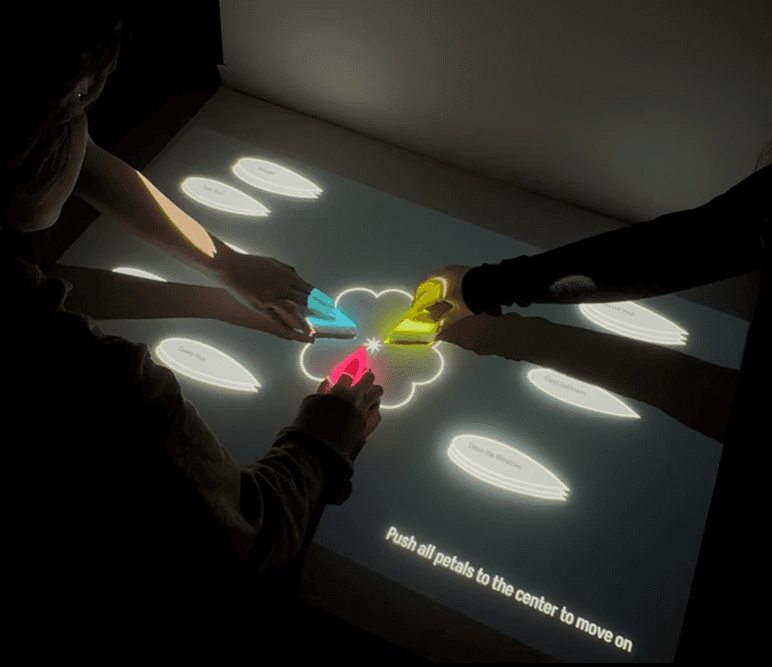
Put petals on table to join
Spin the petal to set up personal color
Use the point of petal to write names
Push petal to the center to move on
Physical Prototype
Digital Prototype
Physical Prototype
Digital Prototype
Task 2: Assigning Chores
Archetypes tasks:
Initiate Assigning Process
Choose chores and make sure they are doing enough
Can pick more chores to catch up with roommates
Drag petals to the sidebar to select chores
Write anywhere to create a new chore
Move the petal close to chores to set frequency
Each person picks chores they want to do, and the system calculates each person's portion
When everyone has equal chores, the ring closes (if someone has less, they need to do more to close the ring)
Task 3: Home Page
Archetypes tasks:
Send encouragement notes
Write down reminders
Get reminded to do chores
Chores are organized by time.
Each petal represents a day with chores to reduce mental load.
Users cross off chores with their petals and write notes anywhere on the screen.
When users place their petal on the table, it recognizes them and highlights their chores.
Physical Prototype
Digital Prototype
Bloommates solves their problems by…
The Overburdened Organizer
The collaborative flower UI turns chore assignment into a fun, collective activity.
I no longer have to pick up the slack for forgotten chores, which preserves household harmony.
The system calculates chores and ensures they are distributed equally.
Automated reminders remove the need for anyone to play the "bad guy."
The Duty-Conscious Negotiator
The Easygoing Forgetter
This table sits right along my daily path, so I don't have to change my routine,
yet I never forget to do my chores anymore.
Takeaways
The mental model is completely different from touchscreen design
I didn't realize how many traditional UI features only work on mobile apps until we started this project. I think the best scenarios for tangible interfaces are spaces where people need to collaborate together.
Creating harmony by changing behavior
I'm really proud of our brand personality. Our initial goal was to maintain harmony in a shared space, and we designed this flower petal system to make sure the atmosphere feels delightful while people are using it. I love the way roommates move around the table to push their petals up at the same time. it's this collaborative moment that brings everyone together. It's not just a task-assigning tool; it actually strengthens roommate connections and makes the planning process fun instead of feeling like a chore.